
Dr. Daniella Perri Blog
Postpartum Health & Wellness
Dr. Daniella Perri Blog
Postpartum Health & Wellness
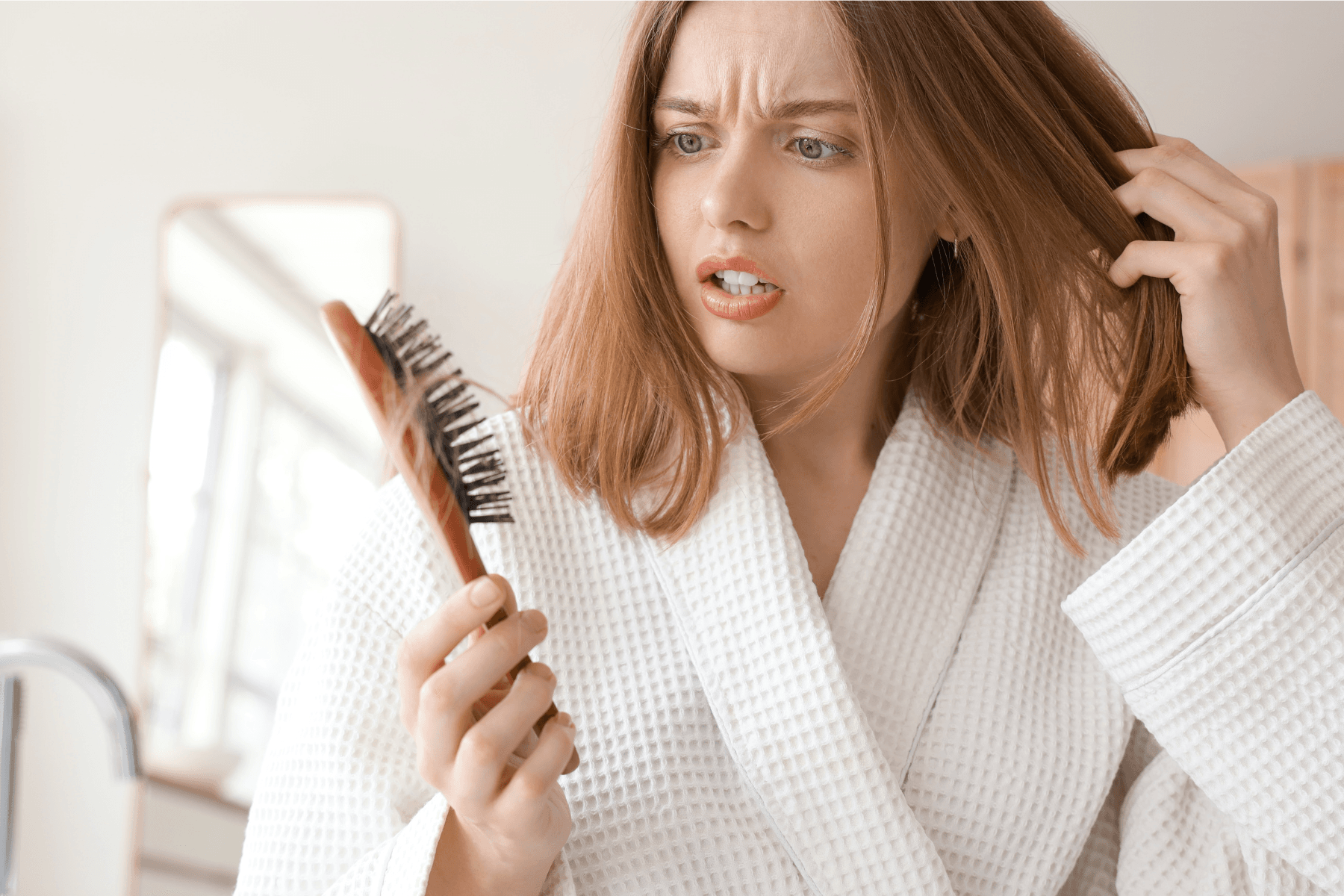
Have you watched countless clumps of hair spiral down the drain while taking a shower? You are not alone in this postpartum hair loss journey, or dare I say, nightmare! A recent study published in the Archives of Gynecology and Obstetrics found that nearly 92% of women experience postpartum hair loss! Whoa!
What’s even more interesting, but not surprising, is that the severity of postpartum hair loss is directly associated with increased postpartum anxiety. This is a double whammy of obstacles that postpartum moms have to deal with. Let me help!
For most women, pregnancy was a time when their skin was glowing and their hair was thick and shiny. This is mainly due to the high estrogen levels that are produced to help maintain the pregnancy. After giving birth, the estrogen levels plummet, triggering what is called Telogen Effluvium.
Telogen Effluvium is a term used to describe the thinning of hair as a result of changes in the hair cycle. Hair follicles go from the growth phase (Anogen) and enter the resting phase (Telogen), especially after birth, causing an increased amount of hair shedding.
In addition to changes in the hair cycle, fluctuations in Prolactin, the breastfeeding hormone, can also influence the timing of postpartum hair loss.
Since so many women experience postpartum hair loss, a hair shedding timeline has been established. On average, this is what it looks like:
However, every mom is different. Your onset, peak, and return can happen at any time; some sooner, some later. Below are some tips on how to manage the hair loss.
Ferritin Levels: This refers to your stored iron levels. Hair follicles require at least 60 ng/ml of iron for optimal hair growth. Talk to your naturopathic or family doctor to get tested!
Vitamins: Being deficient in vitamins and minerals is common during the postpartum period. Continue to take your prenatal vitamins and eat a nutrient-dense diet.
Scalp Health: Using a silicone scalp massager can help stimulate blood flow to the hair follicles to enhance hair growth.
Gentle Haircare: Use healthy shampoos to wash hair and avoid heating your hair when you can. Try going for a wash and wear look!
Low Tension Hairstyles: Use silk scrunchies and clips instead of elastic bands to reduce the tension on the follicles. It also helps to prevent breakage.
If you don’t notice hair regrowth by the approximate timeline of 8 months postpartum, there may be underlying causes to the postpartum hair loss. Postpartum Thyroiditis affects about 5-10% of mothers and often presents with severe hair loss, fatigue, and cold intolerance.
Iron deficiency anemia from previous medical history or even from blood loss after giving birth can also contribute to postpartum hair loss. Restoring iron levels to above 60 ng/ml is essential for optimal hair growth. The main symptom that will help to identify low iron is fatigue, but this can overlap with so many things! You won't know it's low iron until you get tested!
So, now you’ve gone from thinning hair to crazy flyaways! Seeing baby hairs at your hairline is a good sign. It means that the hair follicles are in the growth phase (Anogen) again. Your body knows how to rebalance itself, but if you need to support it along the way, that’s okay!
I am happy to offer postpartum hair loss support in my clinic, MotherWell Academy, and virtually as well. You can book your appointment with me here.